Loading...
Your slope is moving - we build retaining walls designed for Milpitas clay soils and seismic conditions, with permits handled and drainage built in from the start.
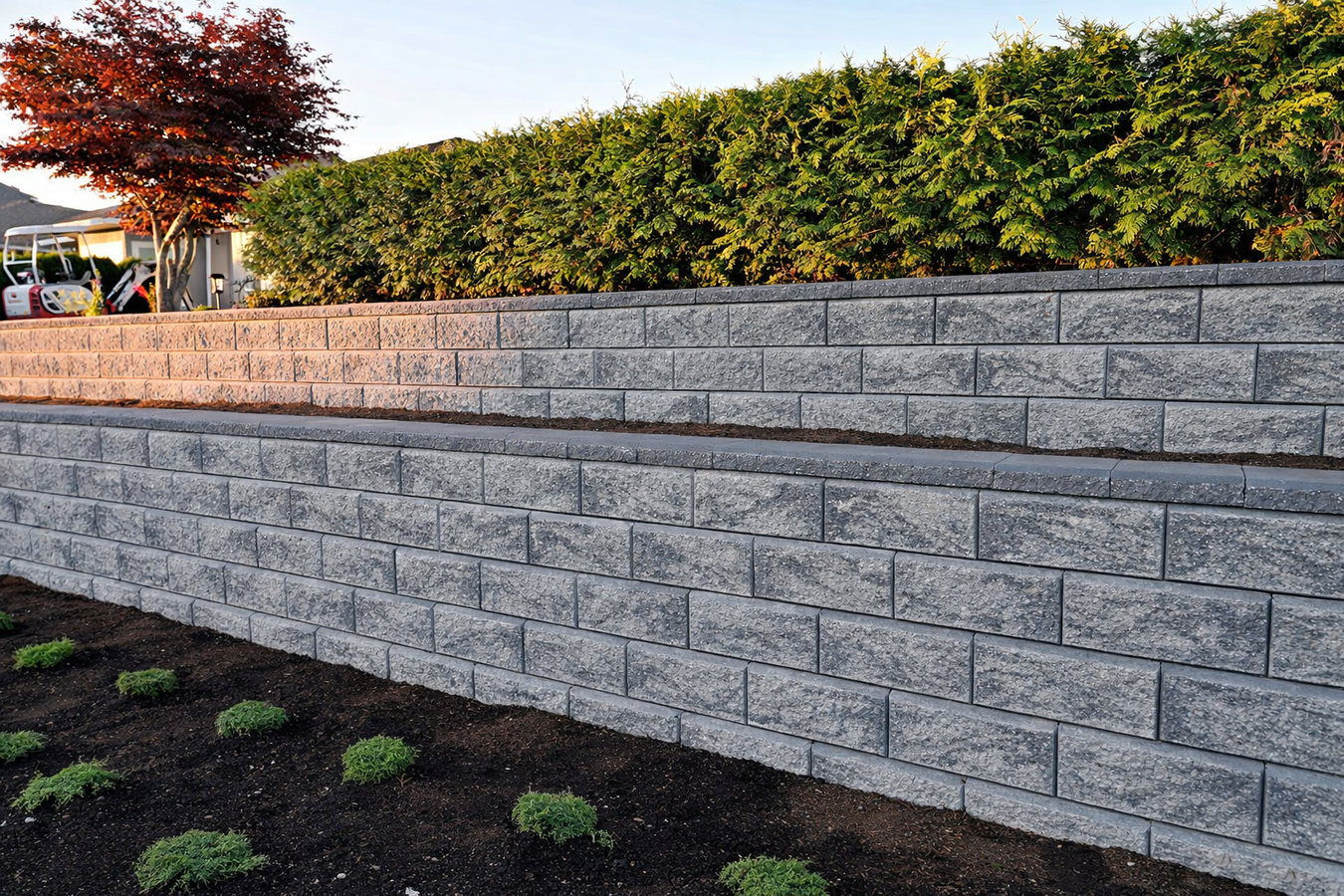
Retaining wall construction in Milpitas, CA means building a structure that holds back soil on a slope so it does not slide toward your yard, driveway, or foundation - using concrete block, natural stone, or poured concrete set on a level footing with gravel backfill and drainage pipe behind it. Most residential walls take two days to one week from start to finish.
A wall that fails almost always fails because water built up pressure behind it - not because the soil itself was too heavy. That is why proper drainage is the most important part of every retaining wall job we do in Milpitas. If you are also dealing with exposed block or concrete surfaces elsewhere on your property, our masonry restoration service can bring existing walls back to sound condition rather than requiring a full rebuild.
If you notice the ground near a slope or raised bed slowly moving downhill after Milpitas winter rains, the soil has lost its natural stability. Small cracks running parallel to the slope, or a planting bed that looks increasingly lopsided, are early signs. Left alone, this movement can reach your foundation or driveway within a few seasons.
A wall that is tilting forward, even slightly, means the pressure behind it has exceeded what it was built to handle. Horizontal cracks near the middle of a wall are especially serious - they often signal the wall is close to failing. In Milpitas clay-heavy hillside soils, this kind of failure can happen faster than homeowners expect because the soil expands and contracts every season.
Standing water collecting at the bottom of a hill or raised area after rain means the slope is not draining properly. Over time, that water saturates the soil and adds enormous pressure to whatever is holding the slope in place. A wall with drainage built in solves both the erosion and the pooling at once.
If you are regularly sweeping dirt off your driveway or patio after rain, or if soil is washing into a neighbor's yard, the slope above is eroding. This is both a maintenance problem and a neighbor relations issue. A properly built retaining wall stops the erosion at the source rather than just cleaning up the evidence.
We build the full range of residential retaining walls in Milpitas - concrete block, natural stone, and poured concrete - with every project starting from a properly leveled footing and including gravel backfill and drainage pipe behind the wall. For walls over 4 feet or in hillside areas, we handle the full permit process with the City of Milpitas and coordinate any required engineering review. When a project also involves freestanding structural walls elsewhere on the property, our concrete block walls service covers perimeter and garden walls built to the same standard.
A retaining wall that creates flat, usable terraces often works best when paired with surface improvements at the same time. Our masonry restoration service can address adjacent masonry that has weathered or been disturbed by slope movement, so the finished result looks consistent and is structurally sound throughout. We provide written estimates for every project - broken down by materials, labor, permit fees, and any engineering costs - before any work begins.
The most common choice for Milpitas residential projects - durable, cost-effective, and available in segmental block systems designed for hillside and clay-soil conditions.
Suited for homeowners who want a wall that looks as good as it performs - dry-stack and mortared stone options for yards where the visual result matters as much as the structural one.
Designed for Milpitas hillside lots where a single tall wall is not practical - multiple shorter walls create level, usable terraces out of a slope that was previously wasted space.
For homeowners with an existing wall that is leaning, cracking, or showing drainage failure - assessment, repair, or full replacement depending on what the wall actually needs.
Large portions of Milpitas - particularly neighborhoods near the foothills and the Calaveras Hills area - sit on expansive clay soils that swell when wet and shrink when dry. That seasonal movement puts extra stress on retaining walls and means a contractor needs deeper footings and more robust drainage than they would use in a sandier area. On top of that, Milpitas sits close to both the Calaveras and Hayward fault systems, which means taller walls here may require a structural engineer to review and stamp the design before the city issues a permit. This is standard practice in the South Bay - not an unusual ask. The City of Milpitas also requires permits for walls over 4 feet tall, and the wet season from November through March makes hillside excavation riskier - most experienced local contractors prefer to schedule this work in the dry season.
Homeowners in San Jose and Fremont face the same clay soils and seismic conditions that make retaining wall work in this region different from most of the country. We bring the same drainage and footing standards to every project across the South Bay, because cutting corners on base work here tends to show up within two or three wet seasons.
We respond to all inquiries within one business day. No contractor can give you a real number without seeing the slope, the soil, and what is above and below the wall location - we schedule a site visit before providing any estimate.
After the site visit, you receive a written estimate breaking down materials, labor, permit fees, and any engineering costs. If a permit is required, we explain the Milpitas process and give you a realistic timeline - typically one to three weeks for approval.
On the first day of work, the crew excavates the wall location and prepares a level, compacted base. This is the most disruptive phase - you may see a small machine in your yard. A properly set foundation determines how long the wall holds, so this step gets the time it needs.
The crew builds the wall course by course, installing gravel backfill and drainage pipe as they go. After backfill and cleanup, we walk you through the finished wall, point out the drainage outlet locations, and handle the city final inspection coordination.
We walk your property, explain exactly what your slope needs, and give you a written quote - no obligation, no sales pitch.
(669) 345-1734We install gravel backfill and drainage pipe behind every wall we build - not as an upsell, but as a baseline standard. The number one reason retaining walls fail is water pressure, and skipping drainage to cut cost simply means a shorter-lived wall. In Milpitas clay soils that saturate every winter, this is not optional.
Walls near the Calaveras and Hayward fault lines need to be designed with ground movement in mind. We are familiar with the California Geological Survey seismic hazard zone requirements that apply to Milpitas and coordinate engineering review when the city requires it for taller walls.
We file the permit application with the Milpitas Building Division, coordinate any required engineering, and manage the final inspection. Unpermitted retaining walls are one of the most common red flags in South Bay home sales - a closed permit on file protects your home's value when you are ready to sell.
We have worked on hillside properties in Milpitas, including neighborhoods near the Calaveras Hills, where steep terrain and clay soils combine to make retaining wall work more demanding than on a flat lot. That local site experience shapes how we approach every assessment and estimate in this area.
A well-built retaining wall in Milpitas is one of the higher-value investments you can make in a hillside or sloped property - it stops active damage, creates usable space, and adds a closed permit to your home's record. We build walls that do all three.
Repair and restore existing masonry walls on your property that have weathered or shifted over time.
Learn MoreFreestanding block walls for property boundaries, garden enclosures, and privacy screens built to the same standard as our retaining walls.
Learn MoreOur calendar fills fast in spring - get your site visit booked now so we can plan your project before the rains arrive.