
Loading...
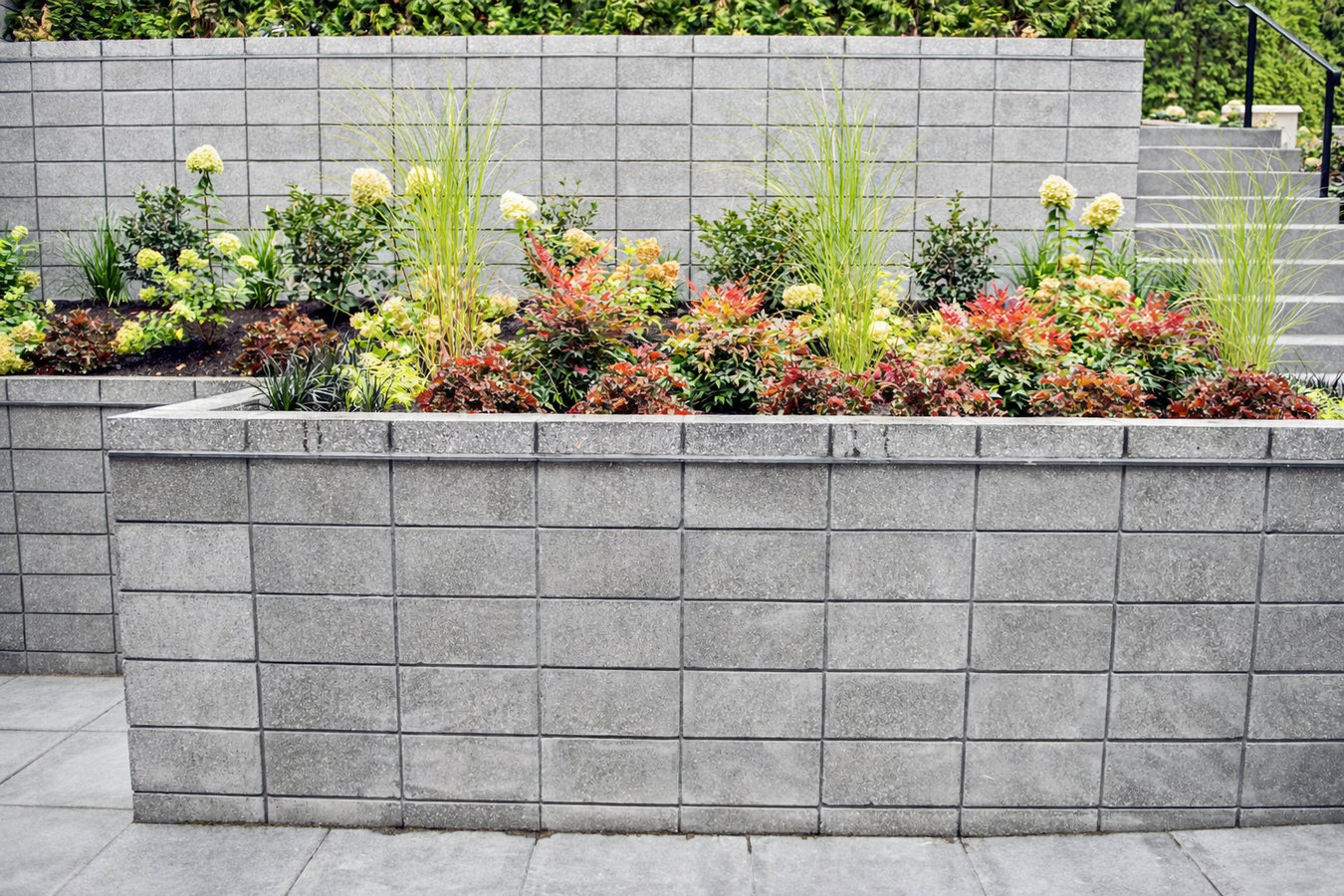
Wood fences rot, lean, and come back every few years. A properly built concrete block wall holds its ground - straight, solid, and permanent.
Concrete block walls in Milpitas start with a poured concrete footing below grade, then stacked hollow or solid block bonded with mortar - creating a structure that serves as a garden wall, retaining wall, or property boundary. Most straightforward residential walls take two to five days of active construction once permits are in hand.
In Milpitas, the combination of expansive clay soils and Calaveras Fault proximity means walls built here need more care in the footing design, reinforcement, and drainage than in other parts of the country. A block wall built without accounting for those conditions can crack, lean, or fail within a few years - not because block walls are unreliable, but because the work was done for a different environment. When your project also involves a sloped yard that needs reshaping, our retaining wall construction service covers the full scope of grading and structural wall work together.
If you have a raised planting bed, a sloped backyard, or a hillside bordering your property and you notice the soil moving downhill after winter rains, that is a sign you need a retaining wall. In Milpitas, the clay soils swell when saturated and the seasonal wet-dry cycle accelerates slope movement. Left alone, a creeping slope can damage fences, patios, and the edges of your foundation.
Cracks that run diagonally through the blocks, sections that bow outward, or mortar joints that are crumbling or missing are signs a wall is under stress or was built incorrectly. Expansive clay soil is a common culprit in Milpitas - it pushes against the wall as it swells in the rainy season. A leaning retaining wall especially should be assessed quickly, because once it starts to go, it can fail suddenly and without further warning.
If you have replaced sections of a wood fence along your side yard or rear property line more than once - from rot, wind, or vehicle contact - a concrete block wall is the permanent alternative. Many Milpitas homeowners in the older flatland neighborhoods are making this switch rather than continuing to maintain wood fences that do not last in the Bay Area climate.
If an existing block wall on your property was built without a permit - more common than you would expect in older Milpitas neighborhoods - a buyer's home inspector or lender may flag it. Getting the wall evaluated and, if necessary, rebuilt to current standards removes a potential liability from your sale and protects your equity.
We build concrete block walls for boundary, garden, and retaining applications throughout Milpitas. Every project starts with the footing - we dig to the depth required for your soil type and wall height, pour the concrete base, and let it cure before the first block is set. For walls that will hold back soil, we include a drainage layer behind the blocks and a perforated pipe at the base so water pressure does not build up behind the wall during the rainy season. Our foundation block wall installation service handles situations where the block wall is connected to or supports your home's foundation structure.
For most walls in Milpitas - particularly anything over three feet tall - we fill the hollow block cores with steel rebar and poured concrete. This reinforcement is required by the city for walls in this seismic zone, and it dramatically increases the wall's ability to resist both soil pressure and ground movement. The American Concrete Institute provides the structural standards we follow for reinforced masonry, and we apply those standards on every permitted project. We handle the City of Milpitas permit application and the final inspection from start to finish.
Ideal for homeowners replacing aging wood fences along property lines or creating permanent enclosures for raised planting beds, pools, or side yards.
Built for sloped lots in Milpitas where soil movement is a real concern - includes gravel backfill and a perforated pipe at the base so water never builds pressure behind the blocks.
Standard on any wall above three feet in Milpitas - rebar through the hollow cores, filled with concrete, engineered to hold its position during the ground movement common in this seismic zone.
For existing walls that are leaning, cracked, or were originally built without proper footings or reinforcement - we assess whether repair is viable or whether rebuilding to current standards makes more sense.
Milpitas is built largely on bay clay and expansive soil deposits that behave very differently from the sandy or loamy soils common in other Bay Area cities. That soil swells when saturated during the November-to-March rainy season and contracts when it dries out in summer. Block walls built on clay without deep enough footings shift with that movement. Retaining walls built without drainage behind them carry the full hydrostatic pressure of saturated soil every wet season - and eventually fail under it. These are not edge cases; they are the standard working conditions in this city. Homeowners in San Jose face similar soil conditions in many neighborhoods, and we design for those same factors on every job across the South Bay.
The Calaveras Fault runs directly through eastern Milpitas, putting the city in a high seismic hazard zone. The City of Milpitas enforces structural standards for masonry walls that go beyond what many other California cities require - steel reinforcement inside the block cores is not optional for most walls here. Homeowners in Newark sit in the same regional fault zone and face comparable requirements. We pull permits in both cities and know what the inspectors are looking for.
Reach out by phone or through the contact form and we will respond within one business day. We will ask a few basic questions - what you are trying to accomplish, roughly how long the wall needs to be, and whether it is holding back soil or marking a boundary - before scheduling a site visit. No honest quote can be given from a phone call alone.
We visit your property to measure the wall location, assess the soil and grade, and check for any HOA requirements or existing structures that affect the design. You receive a written, itemized estimate that includes permit fees - no hidden costs added after the contract is signed.
Once you approve the estimate, we submit the permit application to the City of Milpitas Building Division. Straightforward walls are reviewed in one to two weeks. Retaining walls that require an engineer's stamp can take three to six weeks. We keep you updated throughout so you are never chasing us for news.
The crew excavates the footing trench, pours the concrete base, and begins block-laying once the footing cures. Reinforcement is placed as the wall rises. After the city inspection passes, we backfill retaining walls and clean the site. We walk you through the finished wall and give you basic maintenance guidance before we leave.
Free written estimate. Permit fees included in the quote. No surprises once work starts.
(669) 345-1734Milpitas sits adjacent to the Calaveras Fault, and we design every block wall here to meet California's seismic reinforcement requirements - steel rebar through the cores, concrete fill, and footings engineered for local conditions. This is not an upgrade we charge extra for; it is how every wall we build in this city is constructed.
The expansive clay that covers much of Milpitas is one of the leading causes of retaining wall failure in the South Bay. We design drainage systems behind every retaining wall - gravel backfill and a perforated drain pipe at the base - so water from the rainy season has somewhere to go instead of building pressure against your wall.
Permit fees are included in every written estimate we provide. You will not receive a bill for the City of Milpitas permit after the contract is signed. What you agree to is what you pay - a guarantee that matters on a project with a multi-week lead time between signing and breaking ground.
We pull every required permit through the City of Milpitas and see the final inspection through to sign-off. Your wall becomes part of your home's legal record - fully documented for any future sale, refinance, or insurance claim. The Mason Contractors Association of America holds members to professional standards that support this level of accountability.
These are not talking points - they are the specific practices that come from building walls on this soil, near this fault, in this climate, for years. Homeowners in Milpitas who have dealt with a failed wall from a previous contractor understand exactly why each of these things matters.
Block wall work tied to your home's foundation system - where structural loads and seismic demands require a higher standard of engineering and execution.
Learn MoreFull retaining wall projects on sloped Milpitas lots - including terracing, drainage, and the permit process with the city.
Learn MoreMilpitas contractors fill their schedule fast from spring through fall - reach out now and we will get your permit process started before your project window closes.